All Activity
- Today
-
Why don't you spend time convincing us just how bad he has been for Australians. The inflation you have at the moment is largely globally driven and Australia, which is heavily dependent on imports of fuel thanks to decisions made way back in the Howard era where Japan and China buys gas off us at knock down prices and on-sells for the profits. This denies Australians accessing their own resources at what should be these knock down prices, but also results is massively lost profits locally as a result and also increased input costs as we have to buy our energy at global rates. Sadly, your issue at the moment should be with Chump. The CGT reform - yep can be argued as a bit overboard for some asset classes and it will depend on where you sit in terms of the housing market. If you are a house owner in the cities, yep you are probably spitting a bit as the prices return to a more natural normal rather than the artificially high prices resulting from a disproportionate incentive to invest (and create unnatural demand) in an investment asset class because it was treated more favourable from a tax perspective than other asset classes. However, longer term, the prices will stabilise and those who recently purchased or use leverage to fund investment will be back in the black. But at the same time, it makes housing affordable for people.. who need housing.. Also, as I said unless you owe money on your house wyere you have seen your equity fall a bit, or you are using it as leverage, it will make no real difference as the price relative to other properties will be in synch... Pursuing net 0 is absolutely the right policy for both longer term energy security and a simple fact - it will be over the same amortisation period as fossils, be a lot cheaper. So, for the future of the country, this is vital and people who are wedded for short term pricing are just kicking the can down the road. And that is before the environmental costs kick in. There is only one developed and not too many major emerging markets that aren't pursuing renewables as a, if not the major source of generation. Yes, China is building fossil plants still; its demeand is insatiable, but its is building renewables at a much bigger rate. I am not sure where this sits, but at least a policy promise of the Albo government is to buy Australian. i.e. use public money to channel into Australian rather than foreign interests. As I said, I am not sure where it is. In the fuel crisis, Albos was far quicker than most other nations to reduce tax to reduce the burden on the consumer; many countries (such as the UK) didn't do that at all. If you compare the above to the previous conservative government (and I did a fuller analysis somewhere else), then largely Australia is better off than pursuing the LNP policies, and good luck to you if you think PHON's policies are going to result in an economic nirvana. There are some things that Albo needs to get a grip on.. definitely: Sovereign debit has increased past $1TN. Australia still retains it's AAA+ status with all major agencies, but this is something that needs to be reigned in. The Gas Excise should be applied. Look at Norway and Qatar to understand why. AUKUS is a joke - we could use that same amount to build a locally owned and controlled defence industry pumping out weapons that would really be of use to us. The Fair Work Act, I think is overly onerouos - not so much on the pay and conditions, but all of the other obligations it imposes. There was a case where an award was won under the fair work act because, as I recall, the employer didn't take appropriate steps to protect an employee from domestic abuse... I have to look it up, but it was along those lines. That is, to me anyway, clearly beyond the responsibility of the employer (maybe with some narrow exceptions). AI is coming and it is going to bite faster than people realise. Provision and structural changes are needed to insulate Australia from the worst. I am sure I have missed from both sides of the argument. Labor could do a lot better, but if we had LNP or PHON, they would also need to do a lot better if they implemented what they said they would... and they would have to do a lot more to even catch up to Labor. I am not a "socialist" by any any stretch of the word except one... I do think that people have to work for the economy, but the economy also has to work for the people. And I do believe in a fair reward for risk..Capitalism so far has the most effective allocation of resources. Of course, the fully competitive market can only ever be a theory, and I think you are mixing up true socialism with ensuring fairness in the markets. The disproportionate rewards compared to the risks taken especially at the multinational or large corporate level is currently obscene.
-
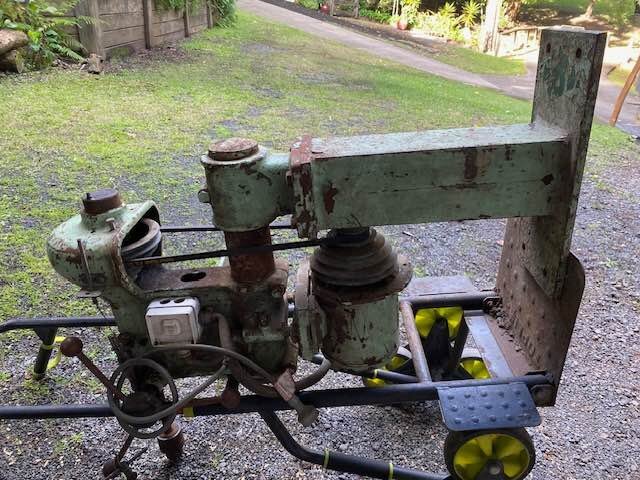
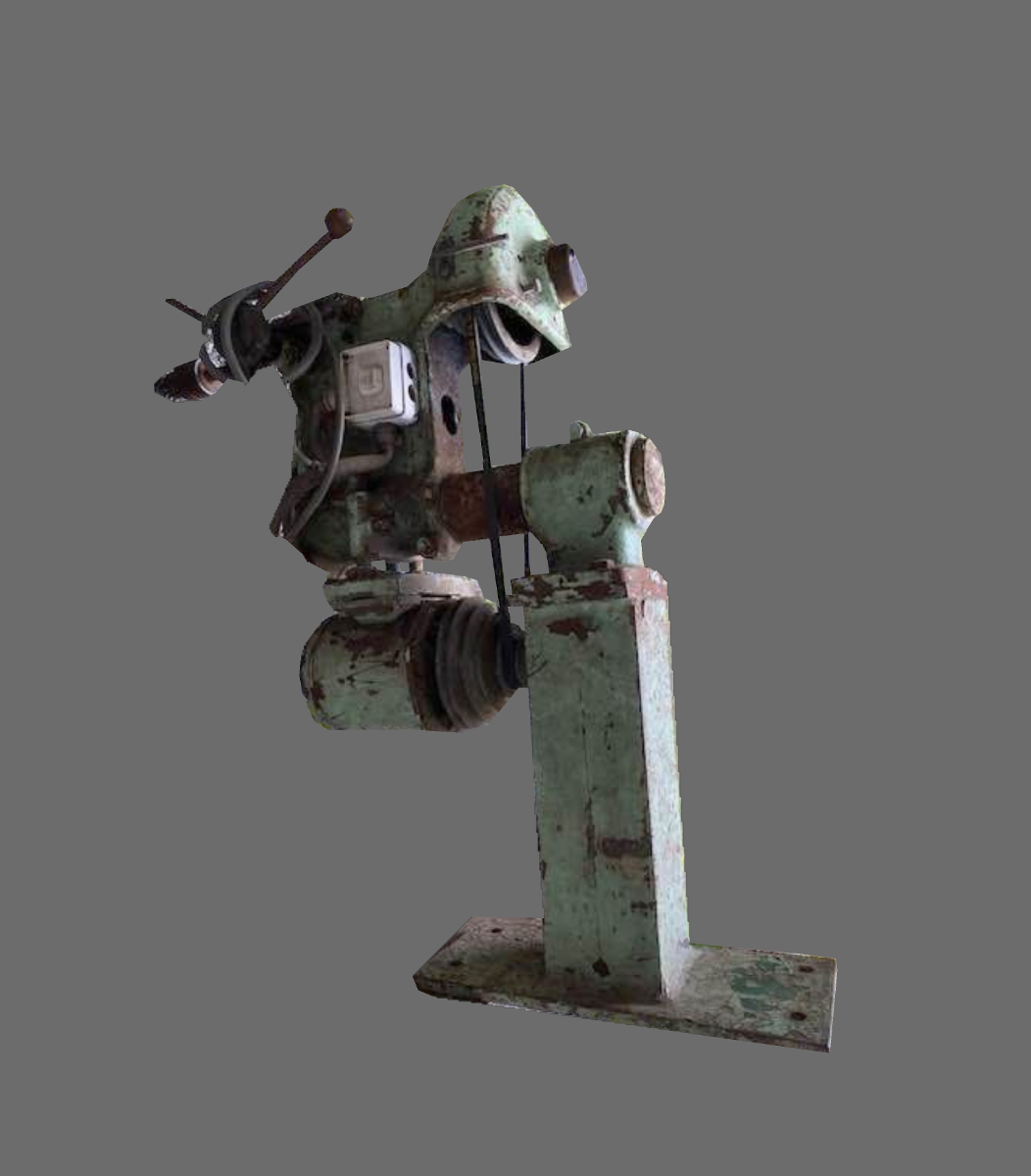
I love old industrial machinery. Today I picked up this old J.S. Richardson drill on marketplace and couldn't resist it for $50. There's way more value than that in the steel, electric motor and other components. Good old drills, made in Sydney in the days when we manufactured stuff and employed Australians. At some stage in it's career it's been converted from a pedestal drill to a wall mount. I already have a big industrial grade pedestal drill, so my first thought with this is to mount it like the second photo I've edited with a flip-around and a cutout. In other words, use the wall mounting plate as a base stand and do a bit of sideways stuff with it. I'll have a good look in the morning and check how that will fit with the gearbox oil level/ fill and drain plugs etc. in that orientation.

-
If you mean people who like facts not lies, your right. Us "lefties" don't respect people who make shit up to try push their opinion.
-
That's a tricky one. Often the leader of a party gets the job because he or she is the best performer on the floor of Parliament. That ability can sometimes also make them the best to sell their stuff to the media. Some ministers are ok at their jobs but are prone to embarrassing gaffs in front of the media so they get sidelined/insulated/firewalled, pick whichever term suits. Often the PM is left with the job of dealing with the media. At least they have their mandatory flanking noddies to keep them company. It puts a big workload on a PM, particularly if those under him/her are bigger idiots than he/she is. It's probably a fine line between overworking the PM and delegating too much freedom to ministers. You see the worst effect of the latter in some developing countries with the amount of corruption that free hand can result in.
-
Google albos media payments
-
Demand what you want. Look it up
-
How could anyone say he is a good prime Minister. He has no interest in helping Australians . I have to stop before I get in trouble again. Too many left wing socialists here.
-
I demand proof of that statement!
-
Albo has been trying to censor the media and social media for a long time. Even paying large sums of our money to tv networks.
-
I really think that which ever mob forms the Government, the person that Party puts in the position of Leader should not have to carry the ball for evry MInister in the Government. Those Ministers were chosen to attned to the operations of a particular area of government. I think that they should be the ones fronting the media. The captain of a sporting team isn't the one who is expected to score all the points for the team. The Prime Minister's role should be more about the international diplomatic side of Federal politics.
-
Times are changing. I was listening to a researcher on the ABC radio and he was talking about the younger generations getting their political information via social media. My brain sieve can't quote the figure he gave regarding those getting info solely from social media, but I was surprised how high it was. That's why Albo and other pollies are doing these social media gigs, to chase the younger vote. We boomers and those a bit younger are used to getting ours from traditional media.
-
Can you seek compensation from the govmint?
-
Keep drinking... Unless you have evidence/reference of course. Would take some amount to convince the Murdoch media to change their view on Albo.
-
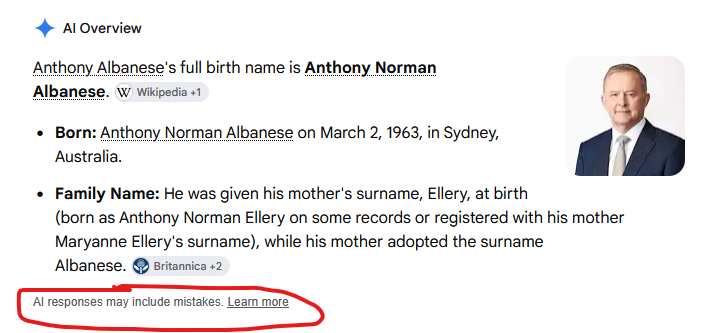
Interesting. Search term for Google: "what is anthony albanese's original name" Response:
-
It is slang these days fort keep believing the conspiracy theories... I didn't immediately discount your claim, but thought it was strange more hadn't been made of it by the right wing MSM in Australia, So I took a look and It took all of 7 seconds to work out that it was a lie and most of where it was being claimed was on social media. With all due respect, objectively, it looks like an example of latching onto a conspiracy theory to confirm one's bias, especially in today's age where it is fairly easy to fact check. So, I don't resile or apologise. And I don't consider it a personal insult. If you want to criticise anyone in public, get the facts, otherwise, expect to be called out for it. BTW, if you read my posts, especially about the federal elections, my opinion of Albo is that he is not the greatest leader; I was very critical of him on many things. Pork barrelling seems to be a new found pursuit as well (note, seems). On the whole, not that it matters much, but he has earned my respect as a reasonable PM for Australia and when you look at the alternatives proffered up by any other party, that team has not done a bad job. They could definitely do a lot better (IMHO - according to my values which no doubt are different to yours). On Farcebook, I have recently ventured beyond Marketplace to its wider ecosystem. The law of multipliers applied to that toxic swamp explains exactly why there is impending social doom globally.
-
Always pays to dig deep into Google AI references. I've seen a lot over time that just quote what some bloke said on Facebook or some other public forum.
-
From Google AI using Wikipedia as a source: 'Yes, Australian Prime Minister Anthony Albanese was registered and born with the surname Ellery (as Anthony Norman Ellery) on 2 March 1963, taking his mother Maryanne Ellery's maiden name.' Just as an edit - the plot thickens. The Google AI references Wikipedia + 1. Hovering the mouse over the reference link show the +1 as a link to a Facebook article where the above was stated. The Wikipedia article doesn't say who he was registered as at birth. So there you go Jerry.
-
I buckled both lh rims on my territory at longwarry a few weeks ago 28 other people blew tyres and damaged their front ends on the same pothole. It was raining and you could not see it. Western Victorian roads are dangerous .
-
I don't follow AFL, but my Dad was born in Carlton Vic, so if anyone asks me which AFL team I follow, I say, 'Carlton'. I couldn't name one player in the current lineup.
-
Keep the personal insults to yourself .
-
You are not looking for facts of any Relevence. All you wish to do is Put $#!t on him. Albo has influence on Media outlets?? Pull the other leg . It whistles. Nev
-
I never read this on Facebook. It has been kicking around for years in different stories I have read. It's odd that all of a sudden it's being said he was born with the Albanese surname. This story has changed and only recently. Albo does pay a lot of money to media outlets so I guess they altered his history.
-
His grandfather who he lived with was a local conman and petty criminal.
-
Albo's still copping flak over his golf club grant. https://www.abc.net.au/news/2026-10-27/pm-claim-marrickville-golf-grant-sewage-fix-rejected/107313346
-
I have a first cousin who was adopted out at birth. It was kept fairly secret and his siblings were never told of it. By the time he was able to trace his birth parents unfortunately his father and sister had passed. On the bright side, he got to meet his mother before she passed and he and his brother now have a strong brother relationship. His brother was in his 50's when he first knew about it and met up. I met the formerley unknown cousin a few years ago and he's a really nice bloke. The genetic resemblance to his brother I've known for life is very strong; you'd never miss picking them as brothers despite the age gap. Same parents. It was an unplanned pregnacy and adoption, later marrying and going on to have two more children.