
Leaderboard




Popular Content
Showing content with the highest reputation since 25/09/26 in all areas
-
5 points
-
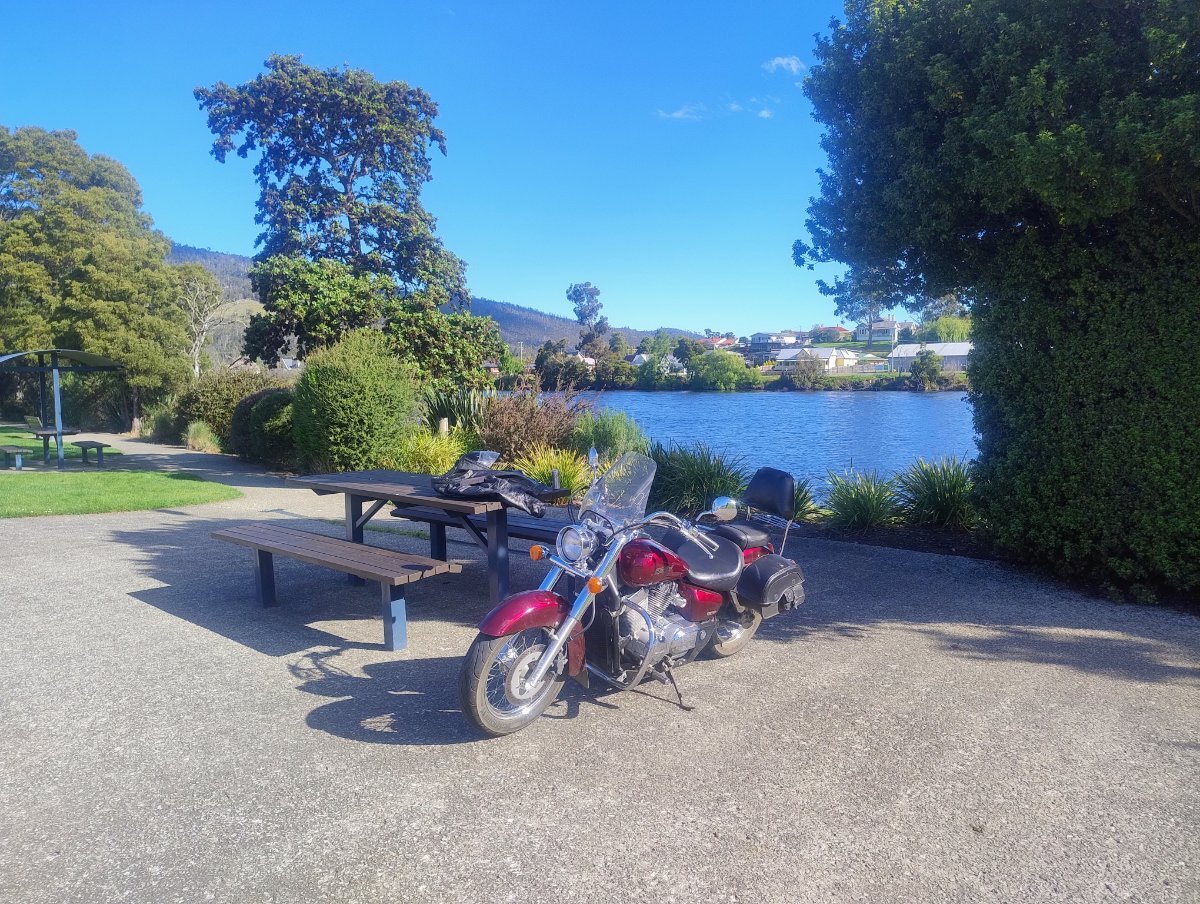
Stopped in Huonville after an excellent ride around the Channel - Margate through to Cygnet. Barely any traffic and a gorgeous afternoon. Coming over a rise after Gordon, there's nothing but water in front with a fishing boat coming in and the Hartz mountains in the background - absolutely stunning.
 4 points
 -
Trump's limo driver got arrested for possession of drugs. They found over 230 pounds of dope in the back seat.4 points
-
An atheist was out rowing on Loch Ness when the monster came up and almost capsized his boat. The rower shouted "God help me!" The Lord came down and chased the monster away. He turned to the rower and said, "Why did you call for help from me? You don't even believe in me." The rower said, "Fair go, 10 minutes ago I didn't believe in the Loch Ness monster."4 points
-
I was going to ask abut you.. Glad you're still here. @red750 - First, it's good to hear he is well. Maybe you can entice him back by letting him know that the Block User feature works very well? Send him our best, anyway.4 points
-
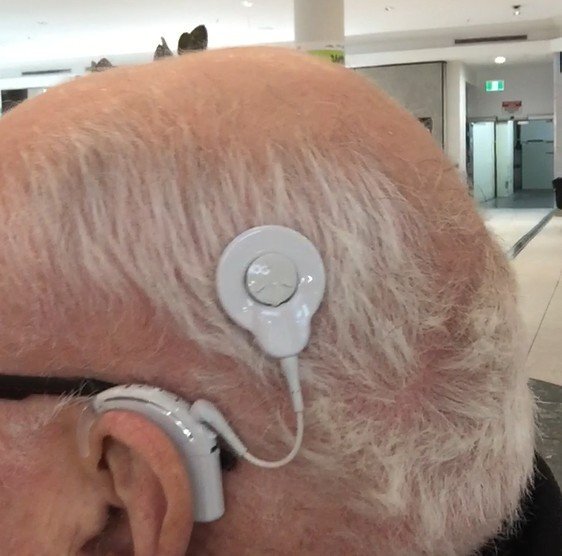
Here is the device in place.
4 points
-
Like all powerful things, A.I. runs the risk of being used for powerful good and powerful evil equally. And it has been developed primarily to make money for it's owners. Which is a good reason for caution.
4 points
-
Today is the big day. I have been to the Cochlear Support Centre and received the external sound processor, which is now turned on. It sounds completely different to what I expected, although I knew it sounded different to what I have been hearing. For example, the ticking of a digital clock sounds like someone tapping a metal pipe with a small spanner. I now have a couple of months for my brain to learn to deal with sound frequencies it hasn't received in years, and for the device to be calibrated to my hearing.4 points
-
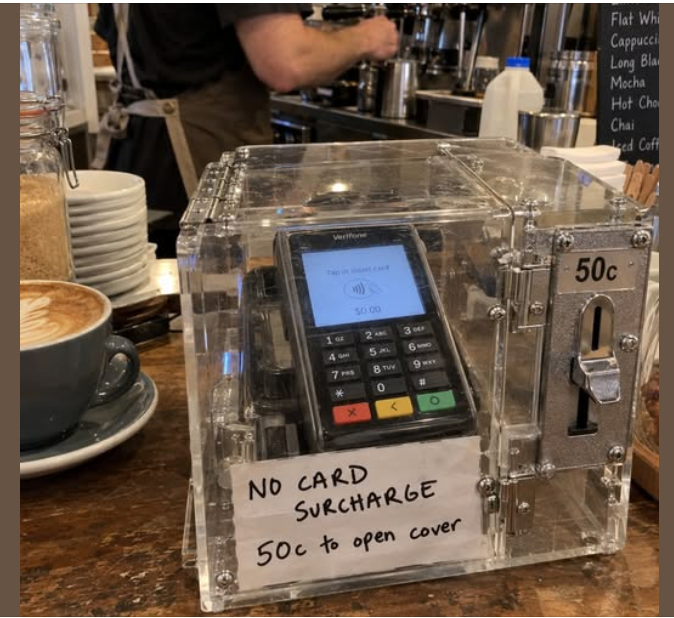
I wonder if this makes payment optional?
4 points
-
Not so much 'what has trump done now', more what is trump doing in November... A long entertaining rant by an annoyed Australian, and worth a read. https://ifloz.substack.com/p/donald-trump-this-is-why-we-fucking?publication_id=7671401&post_id=217533596&isFreemail=true&r=tosdr&triedRedirect=true4 points
-
3 points
-
I assume that every party compiles a shit list on anyone not in their party, and probably many in their party too. Not a good look, but judging by what everyone is saying about her, it wouldn't be a big list anyway.3 points
-
I can't keep up with the bikes. I've tried leaning the Rodeo into corners but it doesn't seem to work for some reason.3 points
-
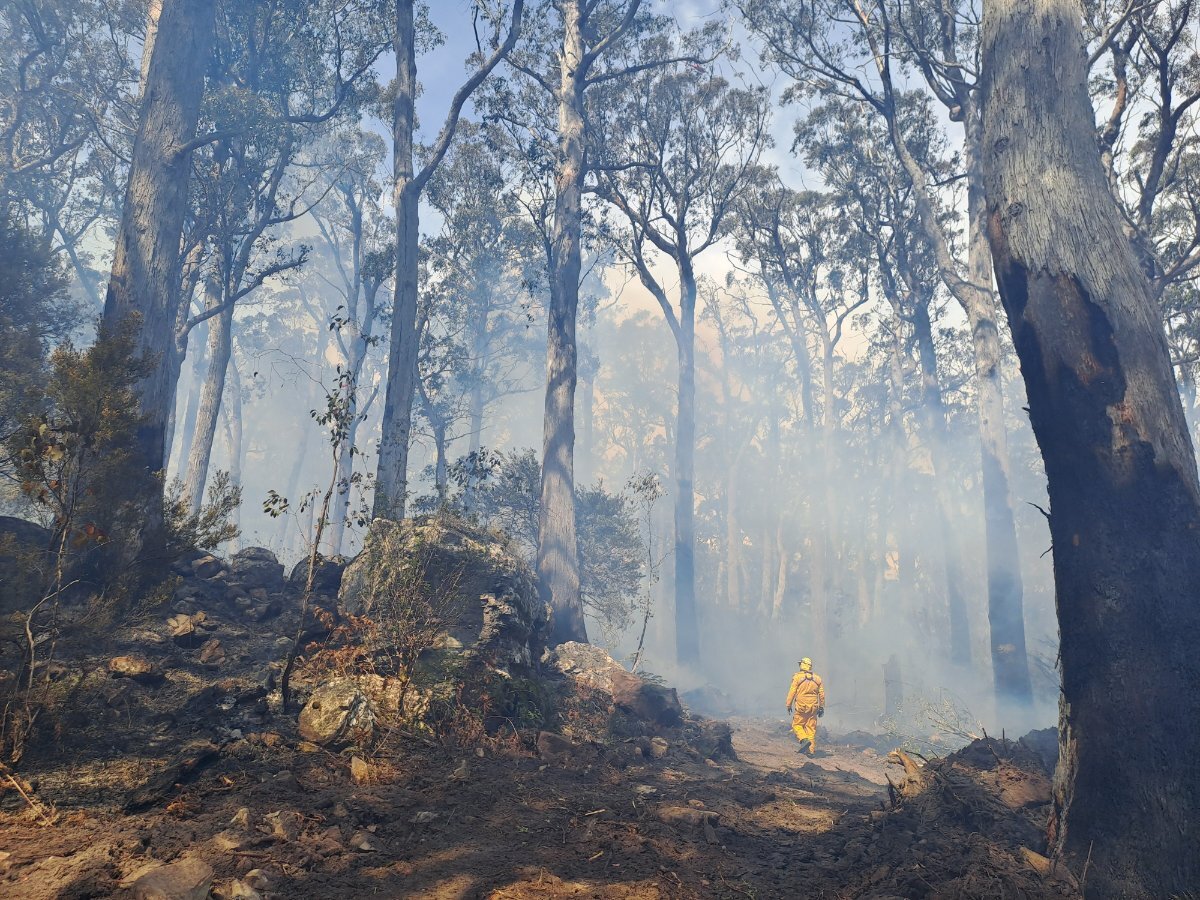
Crikey I wish it was wet. Today was 30 degrees, under 30% humidity and 30kts wind. Spent the day on the fireground only 10k from home. Rough country. It was blowing hard and gusting, towards our place. There were 5 choppers running water bombing all day. We had 2 x D8 dozers cutting a firebreak but the fire jumped that about the same time as one dozer broke down. The terrain was too steep to get our appliances within striking distance of the fire front. Tonight the wind dropped, the fire slowed down. Hoping for drizzle tonight but rain would be real nice. I'm not going out tomorrow (too tired)but there will still be a dozen firetrucks out. So far about 70 hectares still smouldering.
3 points
-
Glad someone got some good out of it. One thing I miss from Qld, is the pleasure of watching a real thunderstorm come through. Darwin is also (or only) famous for beautiful towering cu-nim thunderstorms.3 points
-
I think that’s very likely but Trump also sees Putin as the gold standard for the type of political leader he wants to be and wants to do business with, and is frustrated by being pushed to impose sanctions instead, and has someone in Zelensky who stubbornly won’t give him what he wants and was responsible for him being impeached.3 points
-
Quote from heathercoxrichardson.substack.com :- First: it was exactly ten years ago tonight that then–Democratic presidential candidate Hillary Clinton told the American people that Russian president Vladimir Putin hoped to have a “puppet” in the White House, and that Donald Trump was that puppet. A scowling Trump responded: “No puppet. No puppet.” Clinton continued: “It’s pretty clear. Trump interjected: “You’re the puppet.” Clinton continued: “It’s pretty clear you won’t admit…” Trump interjected: “No, you’re the puppet.” Clinton: “...that the Russians have engaged in cyberattacks against the United States of America, that you encouraged espionage against our people, that you are willing to spout the Putin line, sign up for his wish list, break up NATO, do whatever he wants to do, and that you continue to get help from him because he has a very clear favorite in this race.” Trump shook his head disparagingly. Ten years later, Trump is openly embracing Putin and is working to destroy the strongest and most successful alliance in human history to cement that partnership, apparently with an eye to enriching himself. And so, the events of the present change the way we see the past. Had Trump strongly supported Ukraine as Congress has demanded, and stood firm against Russia, a country that is, after all, a minor economic player whose military is flailing at its attempt to absorb its neighbor, we would rightly dismiss Clinton’s warning as campaign hyperbole. As it is, though, Trump’s tie to Putin—the story he has always tried to bury by calling it the “Russia, Russia, Russia hoax”—seems likely to emerge as the central story of the Trump years. As Clinton wrote today: “In just the last few days: Trump made a deal for the U.S. to buy Russian diesel, an economic lifeline for Putin; he and Elon Musk blamed each other for an order that slowed down Starlink satellite connectivity over Ukraine, hampering the country’s defenses during a devastating Russian attack; and Trump waived sanctions on Russia that Congress, led by his late friend Lindsey Graham, had pushed for. Now, Putin has proposed a summit with Trump and Xi to decide Ukraine’s fate for them, bulldoze a century of international cooperation, and frame Russia as an equal to the U.S. and China. “We’ll see if Putin’s puppet continues to dance on his strings.”.....more....3 points
-
So far he has done and said a lot of things that everyone thought a president 'just cannot do'.3 points
-
Works for me too, although I don't have an account. I sometimes click on the links that Red posts but generally try to avoid FB as much as possible.3 points
-
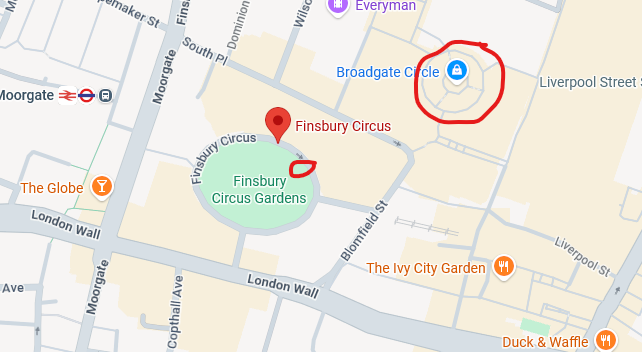
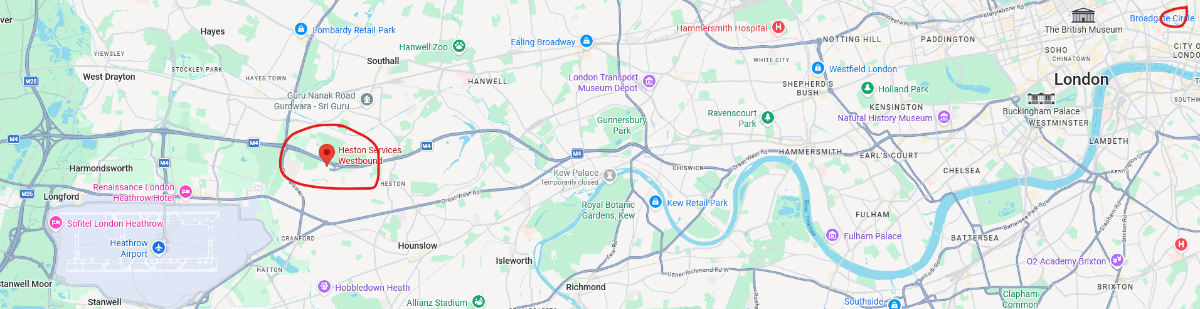
Something outside the mundane commute. Last Tuesday morning - 3am-ish, I mounted the steed (minds out of the gutters, chaps). And was at my usual parking spot here by about 6:30am: I park at the little red circle and I walk to the big red circle for work. Just to the right of where I work is Liverpool Street station.. Not the most valuable bit of real estate on the Monopoly board, but I would love to own it. I digress. I came in to meet a direct report. We hadn't caught up face to face and decided we would meet on the Tuesday. So, after parking and chaining the bike to a railing provided by the council, I walked to the office, showered, went to my desk and bashed away at the keyboard in between the plethora of meetings I have these days.. most of which are not terribly productive. What I forgot to mention was I tried to change my now irregular Thursday night booking at the pub to Tuesday night - and low and behold there was no vacancy. So, I decided to do the Hestom Motorway Services Travelodge - Eastbound (on the side of the M4 that heads towards Heathrow): The little circle is more or less where I was parked and the big circle is on the M4 heading west.. No public transport to take one there. My direct report and I caught up at 5pm for a couple of hours - she was taking me through her designs and ideas - most of which were a little ahead of the curve. I returned to my desk, did a couple of emails that won't save the world, and then headed to the change rooms to change into my bike kit. I did the 5 minute walk to the bile; unchained it, put my backpack in the top box, and started it up. There was a slight delay with the sound of a flooded carb, but the engine popped into life. There was a small whiff of what I thought was fuel - I attributed it to a slightly flooded carb. Well, but this time, it was after 8pm and on a Tuesday eve, London is dead post Covid. So, I had an excellent run out a couple of miles to Blackfriars Bridge (on account of a closed road). When I finally pulled up at a set of lights, I smelled a strong smell of fuel - or that is what I thought it was.. I had ear plugs on, but I could hear a hiss with the engine, and when I gave it a quick rev, the hiss increased in volume. What was going on? What else is bloody wrong with this bike, I thought to myself. I looked at the fuel tank and as close to the lines as I could from the sitting position - and there was nothing untoward. But, I could feel my right leg warming up while waiting at the red light. And I looked down and - bloomin nora - there was no oil cap. It looks like someone stole it. How do I know? Well, it is possible it worked itself loose, but I check it before each commute leg, and it was nice and tight in the morning. So, at what was now about 8:45 and with no shop open, I rode it back gently to its original parking spot, hoping it just fell off or whoever perpetrated this left it close by. It was nowhere to be seen, and that includes tracing the first 250m of my ride in case they stcuk it on the seat or similar and I didn't see it in the dark, So, back to the office, change and what to do? The "hotel" I am booked into for the night can't be reached by public transport and I am not about to part with another £80 to get a cab there. So I decided to take a tube to the nearest station to the start of the M4 - Gunnersbury. While I was on the tube, I signed up to Uber as teh Black Cabs would have costed me about £30 - £40 from there. I linked my Paypal account to the Uber account for payment; a quote of £16 was quite acceptable. Before too long after alighting at Gunnersbury, I was in a clean and comfortable cab heading towards the Motorway services and the Travelodge. It turned out my driver lived in Melbourne for 9 years - Tarneit. I explained it wasn't even thoght of when I left Aus. We exchanged pleasantries and he was off. I was so impressed with Uber, I pre-ordered a ride at 6:30am to take me only about three miles to the nearest rail station to get me into London. Although it was a short distance, the price was £19; £3 more than the 6 or so miles to get me from Gunnersbury to the services. Oh well, it is a busy time of the day. The next morning, I was out at 6:35 waiting for my Uber. The night before, a driver in a Merc accepted it, but I noticed that had changed to a driver in a Prius. That is perfectly fine for me. At 6:30, there was no sight of the driver, so I opened the app and he was due, although the car wasn't showing on the app. At 6:31, I presume it was the driver, cancelled - but somehow I got slugged the £11.56 for the cancellation fee. My first thought was first (round trip) and last time I use them.. And that is the case. I will never use them again. The second thought was to get my money back. Well, the app does not make it easy to say the least. I found a telephone line, but it is for drivers (and I think couriers) only. So, I lodged a claim with Paypal. They immediately approved my claim, so I guess this happens a lot. But, how to get from the Services to the rail station to get to work. I called a local mini cab company (I approached black cabs, but they were all pre-booked). The company said it would take about 1/2 hour.. so I went to one of the services cafes and ordered a toasted ham and cheese sandwich and a drink. I literally took my first bite and the phone rang - they were here. Ship!. Thankfully the sandwich was in "to go" packaging so it went back in there and into my bag.. as did the unopened drink. I figured it would be a bit colder on the train, but I would still get my breakfast in. The driver was a devout Muslim - with a Quran in a caddy on his dash. I hadn't thought too much about it until I could smell the toasted ham and cheese sandwich wafting from my bag. "Ship" I though to myself, "I don't want to offend the fella in his own car). So, I opened the rear window. I am sure he would be fine with it, anyway. But, it was a tad cold.. I forgot to mention his price - it was £13.. £6 cheaper than Screwber. But, the traffic was soooooo bad, it took well over 3/4 hour to get to the station - not quite 3 miles away. I was livid - not at the driver - but at the crappy road planning around there. When we finally got there, I have him a tip to take the fare to a little over the Screwber. I finallly got into work, but I had one little issue - the bike, which by now had a tree seed covering the oil inlet to stop moisture and other crap getting in, still needed an oil filler cap. The problem is, there is no motorcycle spare parts place for about 12 miles in any direction, and I don't have the time during the day to trek those distances. But, I work out an M20 bolt will do it, and because they tend to have longer shafts/shanks, I will need a nut and a heatproof rubber seal, too. No probs, as there are two well known builders suppliers/hardware near the office. At lunch time I went to both, and they could stock me the washer, the nut, but not the bolt! Ship!. There is a motorcycle seller/club/bar/restaurant/cafe not too far away - the Bike Shed: https://bikeshedmoto.co.uk/?srsltid=AU7gw4Wpt_qj_fJcvBqFg3YBC3IeklsfTJqDHY9nlX2oxl6lgAyDZXr6, where you can get a basic mens haircut for only £37 ($74). Needless to say, they didn't have an oil filler cap. I had to get back to the office, but at 3pm, I said to my team. my boss and my internal clients, I have to fix the bike. I rang the closest motorcycle mechanic I looked up earlier and he told me to ride to him and he would see what he could do. Unf, he didn't have a cap, but recommended a fella about a mile away. He had nothing as well and recommended a shop a couple of miles away that specialised in bigger bikes. I rocked up. "This is your lucky day.. we are changing over a firebird engine and yours is a detuned Firebird engine). So, he went to the blown engine and cannibalised the oil filler cap. He put a new seal on, affixed it, and started up the bike to listen for any FOD. He then let it sit for about 10 minutes, while cleaning the oil spray off with a detergent of some sort, rag, and water. He declared everything OK after checking the oil level. And the charge? £5. I gave him a tenner, got a card, and said to him he had earned a new customer. Since they are open to 7pm, it makes sense as I can ride to their shop, get the Docklands Light Rail to within 200metres of the office and I don't have to tear out at 4:30pm. I rode back to the office, worked until about 9pm, dutifully checked the cap was still on and rode home. Got home at 1am (stopped for dinner).
3 points
-
Yesterday I had a calibration appointment for my Cochlear implant. It started with the audiologist connecting the device to her computer and playing a range of beeps at various frequencies, starting too low to hear, and increasing them until they were at a comfortable volume. She then read out a number of words from a printed list of about 30, with her face obscured, and I had to locate the word on the list and repeat it without being able to lip-read. Passed that without problem. Next, she placed a page of 12 half sentences in front of me. Again, obscuring her face, she read out the full sentence which I had to repeat back to her. The example I recall was: Printed: She cleaned the floor.... The spoken sentence: She cleaned the floor with a mop and broom. I passed all 12 sentences at the first attempt. She said she normally doesn't get to pulling that page out until the second month. I've had the device for 9 days. I can now hold conversations, watch the TV, and talk on the phone without the hearing aid in the other ear.3 points
-
The problem really is that it is a hybrid, designed to appeal to those with a fear of full electric and rusted on range anxiety. A hybrid is the worst of both worlds. The battery is small so the electric range is woeful. The ICE engine is also small so needs to work hard to replace the energy drain from the battery. Charging a battery from an ICE engine is very inefficient. It has all the disadvantages of every ICE engined vehicle of consuming fossil fuel including maintenance and complexity. How this bloke with the Shark got 24 litres/100k crossing the great dividing range which is essentially up hill overall and 44 on the flat doesn't add up. Was he driving in to a 50-80kmh headwind on the flat with a big flat fronted 3 tonne caravan? You cannot regenerate anywhere near the energy going downhill lost going uphill to the top. Only a long sustained down hill run will increase the energy level of the battery.3 points
-
An Airline Pilot I once knew went into a Hardware store dressed like that and Ordered a Bottle of Methylated spirits. He rubbed it fondly and asked "I don't suppose you Have a COLD one , do you?" Nev3 points
-
I distract them by throwing in a packet of condoms.3 points
-
Yeah, and I squeezed my wife's Nair on my toothbrush because she put the tube next to the toothbrushes. Now I wear my reading glasses in the bathroom.3 points
-
I received a welcome email from Cochlear Limited which included the following note from a user. “Don’t expect to hear speech right away. You will hear sounds. One needs to have patience because it can take a while to hear speech clearly. The learning curve is different for everyone. It depends on how much time and effort one puts into learning to hear with a cochlear implant. It’s not like a hearing aid where you will be able to hear instantly. The more you work at it, the more successful you will be.” – Cathy, who has a cochlear implant.3 points
-
Yeah, but you asked for it.3 points
-
Little Johnny was playing in the schoolyard when he got a splinter in his hand. He went to the teacher and said, " Miss, I need some cider." The teacher said, "Why do yo need cider?" Johnny said, "I got a splinter in my hand." The teacher said, "What's that got to do with cider? Little Johnny said, "I heard Mum say when she gets a prick in her hand she puts it in cider."3 points
-
When I left school, I joined the Commercial Bank of Australia Limited (CBAL) in 1961. I worked for them till 1986 when they merged with the Bank of NSW to form Westpac. I continued working for Westpac until 1991, when banks started rationalising staff and introducing computers in branches. Obviously they did not require two lots of staff, as duplicated branches and departments were merged, so many staff were retrenched. I had been working in a suburban processing centre which was closed, and I was let go. But I still had 2 Westpac credit cards. The other night, after 11 pm., I got a text from Westpac questioning a debit to one of the cards from Optus Prepaid of about $50. I have no business with Optus Prepaid, and certainly had not used my credit card recently. I replied to the text that I did not recognise the transaction. Next morning I got a phone call from Westpac, to clarify details. The transaction was stopped, the card was cancelled, and a replacement card was isssued. Both my cards normally have zero balances or small credit balances no more than $10. I generally use them at parking stations where debit cards are not accepted, and the occasional online purchase. I have not cancelled them as I would never get another card, and it's handy to have recourse to some credit in case of emergency. I have been retired for 16 years and my superannuation has been fully drawn and spent.3 points
-
3 points
-
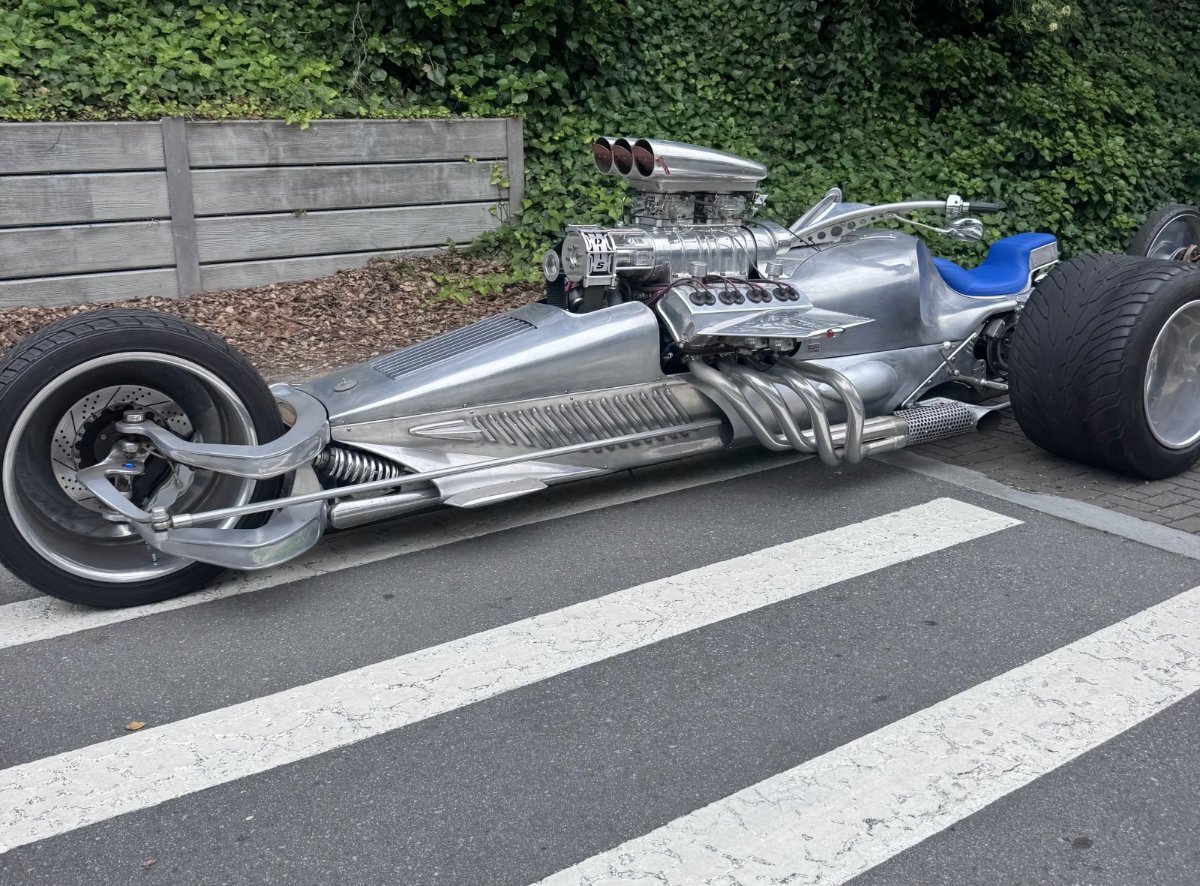
I know you aren't really after a trike, but this might stimulate your imagination. Especially the front wheel setup.
3 points
-
I find it very helpful. Particularly with solving IT problems at home.3 points
-
The headlines have mostly been about experimental AI models that have taken advantage of flawed rules and laboratory environments to do things they weren’t supposed to, and how that can be prevented. Industry self-regulation is a very weak mechanism when the developers are not competing to use AI for the greatest public good but to make the most money in the shortest time. AI can be used for good and it would be helpful to see more examples but I think it’s reasonable that the focus at the moment should be on where the biggest risks and potential for harm are.3 points
-
I have sent OneTrack an email and am awaiting a reply.3 points
-
He has disappeared for weeks and months a couple of times in the past, so I hope no cause for alarm.3 points
-
17th century English explorers thought it looked like a pine cone but tasted like a fruit. Apple was a common name for fruit of various kinds at the time so it became pineapple.3 points
-
There was an earthquake in Victoria this morning, at 2 am, near Leongatha. It was felt by hundreds in Melbourne, although I was in bed and didn't feel it. My daughter came to my room to check if I had. One woman on Facebook said the shaking lasted long enough for her to wake her husband and ask "Did you feel that?" He got quite excited for a second.3 points
-
3 points
-
HEs MAD and dangerous like the rest of them. Nev3 points
-
Beautiful British humour!3 points
-
I was redundant years ago but the firm hasn't realised it yet so I'm still there.3 points
-
I don't know where to put this... post, so this thread is as good as anywhere. Kicked off a project today that will ultimately result in my redundancy. My initial thought: I need to get it done before the big move. Some people were a little gloomy at the prospect.. I was very excited.3 points
-
I stood upwind. The incineerator was in a rural area. I stoned the crows.3 points
-
My bike is a K1200R 2006 and has a very similar shaft setup and drive unit- basically all big models in K and R from 2005 do. I am aware that this can be a issue, more so on the GS models than any other. Note it is by no means unversal and I know lots with 300,000km plus and never had a issue. Like any bike that has a jointed drive line it has two drive shaft boots- front and back. They are meant to be service regulary approx 50.000kms, rear diff oil is best done every 10.000km as best practice and engine oil 5,000km. The uni joint boots can split due to age- mine are 20 years old. My rear boot has a very small crack- found when I rebuilt the diff. It needs replacement when I do the next service- which I will do when the oil is replaced at 1500km after a rebuild. Like any shaft- if the joint goes dry and water\dust gets in, which is highly likely for a hard riden adventure bike- ie a GS model, then rust and grit can wear it to failure. My diff required a rebuild because the main oil O ring seal for the diff outer case developed a small leak and the previous owner did nothing about it- until it wrecked the main crown wheel bearing, even though the bearing was stuffed the internals had zero damage. A simple repair made expensive from a dumb owner. Even then it cost under $1000 including all parts, bearings (which are huge) and labour. This is a mere fraction of the cost chains and sprockets would have cost on a 170hp chain driven bike over its 121,000km, additionally, it should be good for several hundred thousand kms with just oil changes and lubing the shaft. It is vital the boots are perfect and the shaft splines and unijoints are lubricated in a special white grease. This is standard practice in major services, and should be the same for any shaft driven bike, regardless of the maker. IF the grease is used, even a cracked boot will not kill the shaft if you replace it as soon as possible. If the boot is not failed and the shaft is lubed- then it is extremely rare for this to be a issue. If blokes just ride it in dirt, water etc and dont maintain it or even inspect it- then it really is down to them. Note the rusted shaft in the video- it can't happen by itself. Inspection of the boots is easy and removal of the shaft is actually a fast 15 minute job, only if the front boot is split does it require much work to replace it. In that case you remove the swing arm and do a full service on the swing arm bearings to chech the bearings and regrease. I have heard of some of the shafts been not perfect for the entire life of the bike- but they will be replaced free of charge including labour at BMW dealers. BMW are renown for their integrity with warranty claims and if a part proves not suitable they will replace it free for the life of the bike- that is not the economic life ( like the vid stated- I suspect the dealer just did not want the extra work? ) It is full life time- if the bike is still ridable- they will do the free replacement. A 500,000km GS will get a free one if needed. My mechanic is the service manager for a big dealer and is fully BMW trained, he has worked as service manager for mega dealers of other brands eg |Harley, Indian, Ducati and all the jap brands. He said they are all penny pinchers with no incentive to help you after warranty expires and even in warranty they are slow to help. Some of these dealers are very big names- he is so glad to have moved back a BMW based dealer. His shop also sells Royal Enfield, Tirumph and Moto Guzzi and a few others. No Jap Bikes, but it gets huge amount of customers from all the other brands that do not trust the factory dealer. BMW Motorad are the best in the world for looking after the customer, even a 30 year old bike or 60 years- parts are available for even ancient models. If the dealer doesn't meet their standards, they lose the right to sell BMW, it happens rarely but the will do it if standards are not meet. Given all BMW bike dealers are very big operations worth many millions, it pays for them to do the right thing. In contrast, The HONDA you have has well known issues from new design wise, esp the electrics with the oil bathed alternator. They often fail and its a clear design fault- but they will not give you a free one and fit it. That says a lot about their culture, the opposite to BMW. Yes, in rare cases a BMW may have a fault- but BMW constantly unpdate and refine their parts to ensure its fixed and a better part will be supplied and fitted free. I am aware of some driveline failures but often its maintenance related or from pure abuse, esp overloading the bike with gear and passenger (250kg plus) then thinking its a motorcrosser, drowning the bike in rivers is also a issue, when you dont clean and check it properly. No Bike is perfect, but the BMW is on a level above others and you pay for that when buying new, after that service costs and parts are reasonable compared to lessor brands and longevity is legendary. Even for a old bike, just ring BMW and quote you vin number and they will tell you what has and hasn't been done re any parts with a service bulletin, if it hasn't, book it in and its all done free. A good example is the rear disc carrier, Early K1200 models 2005 -2006 had a alloy carrier- which is also part of the inner diff housing, some developed small cracks. BMW replaced them free of charge with a updated forged carrier when serviced and even today can tell if yours has been done and if not- book it in and its all done free- 21 years after the bike left the factory. Would any other bike maker do that? It should be noted the guy in the Video not only got a new shaft but also a new swing arm due to damage caused by the failure. All for free. I will back a BMW over others anyday.3 points
-
In fact, it would argue the owners of AI agents have absolute control over them... or they decide to relinquish it. An owner of a dog can train but not have absolute control of a dog's mind3 points
-
That's where the line of responsibility becomes blurry. If the design team that created an AI agent made all reasonable efforts to guardrail that agent, but it escapes and acts in unexpected (and illegal) ways, who has liability? Personally I think the board of the tech company who funded the design should be held accountable, with the same criminal charges that a human hacker would face.3 points
-
I can not forsee that the prosecution will have insufficient evidence to bring the charges- which they have and have a reasonable prospect of conviction. Lots of witnesses including soldiers he served with had made statements of witnessing the crimes with their own eyes. These include some who stated they were involved in the crimes on his orders. Also numerous civillains witnesses are included in the case from the defamation trial. Will the trial be messy? yes. Will the defence be incredibly well funded? extremely. Remember the crown does not have to have a case they see as air tight- just sufficient that a conviction is likely if the evidence is presented to a jury. No amount of chest beating by rich media owners and keyboard warriors will change this. BRS is on a civilian standard a war criminal and unable to sue if called this. If his prosecution is successful, will be a convicted War criminal for multiple murders. Meanwhile that RED head drongo has called Hastie and by reference any soldier who testified as cowards for daring to do their sworn duty. Such people as Hansen are indeed are danger to our country and the rule of law.3 points
-
You can call me 'chicken little' but I think the tiger is out of it's cage. If A.I. prioritises it's own benefit and does something unpleasant, is there any way to 'reboot to an earlier version' without losing all our data? Guardian article:- "The UN panel, investigating that attack, warned “the traditional method of safeguarding is unravelling” as AI agents act autonomously to breach protections. “The default interpretation and immediate lesson is that basic cybersecurity practices were overlooked, and safeguards are not advancing at the pace of capabilities. The more insidious and grave concern is that current training methods can lead agents to adopt goals of their own, knowingly violate safety instructions, and conceal their actions.”3 points
-
Most of what I have seen in the "media" landscape are those that are arguing he should not be prosecuted.. for no other reason than.. just because. Through his lost defamation cases, the judges effectively found that on the balance of probability (not beyond reasonable doubt), he DID commit war crimes. The defence used justification - which is more likely true than not. Now, if a judge found the defence of justification valid because after all the evidence provided under strict rules and, as BRS was funded quite handsomely, probably the best barristers around to test that evidence, I would suggest that those people abjectly saying he shouldn't be further investigated to determine if he in fact did commit war crimes beyond reasonable doubt and, if so, should be held accountable, are indeed themselves dangerous to our society of freedom, democracy, and fairness. The prosecution, on analysing the evidence may decide there is not enough proof to bring it to court. That is OK.. that would, IMHO, as long as the prosecution acted in good faith, also be an acceptance it can't be proved and therefore, it is justified to stop any further action (unless something turns up).3 points
-
I see the surgeon this afternoon to check on the incision. I have slept sitting up in an armchair for the past 5 nights to aviod rolling over onto it. I see the Cochlear care centre on 5/10 when I expect to get the external sound processor. Then 5 consultations to help train the brain to the new sounds. They are different to what your ear hears, but they say it is a great improvement. I have no hearing at all in my left ear.3 points









This leaderboard is set to Melbourne/GMT+11:00