
willedoo
-
Posts
8,304 -
Joined
-
Last visited
-
Days Won
152
Content Type
Profiles
Forums
Gallery
Downloads
Blogs
Events
Our Shop
Movies
Everything posted by willedoo
-
It will be interesting to see what becomes of a high court challenge. The judge in this case said it functioned as a test case for the claims of both parties. Marty, you judge Hanson's intent on her past history and you have every reason to, but a court can't take any previous statements on other past matters into account; they must only judge on the matter at hand. If an appeal to the high court happens, they'll have to judge on whether her words I quoted in a previous post constitute racism. The words alone don't in my opinion. Pakistan is a geographic area and a soverign state, so on words alone she's telling someone to go back there. It's her intent in using those words that the courts decide on. On words alone it's no different than if you came up here and I told you to piss off back to Tasmania. You know yourself how many times Tasmanians have said they wish mainlanders would piss off back to the mainland. That's not racist, and it could be argued not necessarily Stateist, just a desire to be left alone. But on words alone, it's no different to what Hanson said.
-
Sorry to requote Marty but she didn't tweet that. This is the text in question: “Your attitude appalls and disgusts me. When you immigrated to Australia you took every advantage of this country. You took citizenship, bought multiple homes, and a job in a parliament. It’s clear you’re not happy, so pack your bags and piss off back to Pakistan - PH.” Probably where you've got that from is that Justice Angus Stewart found Hanson’s comment that Faruqi should “piss off back to Pakistan” was a “variant of the slogan ‘go back to from where you came from’” which he said was an a “racist trope” and a “strong form of racism”. So she didn't say it but the Judge had the opinion that it meant the same as another saying they considered racist.
-
No I'm not saying that Marty. Read my post more carefully. What I'm saying is that the words alone don't refer to race, only former nationality. Get over the Hanson thing for a minute and think about the words alone, no matter who utters them. She told the person to piss off back to the country she migrated from, no mention of the person's race or religion. Forget about Hanson and look at the example of a white Australian telling a white Kiwi to piss off back to NZ. Would those words alone constitute racism of one white person toward another? I'd consider a case like that to be nationalistic based and not race based. If Hanson had told a white South African to piss off back to South Africa, is that racist? Would she be having a go at the person's race or nationality? The point I'm making is, that the words she used are not racist but nationalistic. That's looking solely at the wording and not taking perceived intent into account. The court obviously made the decision that they thought she had racist intent in what she said. The words alone (regardless of who spoke them) don't convey that. That's what a high court challenge will have to sort out.
-
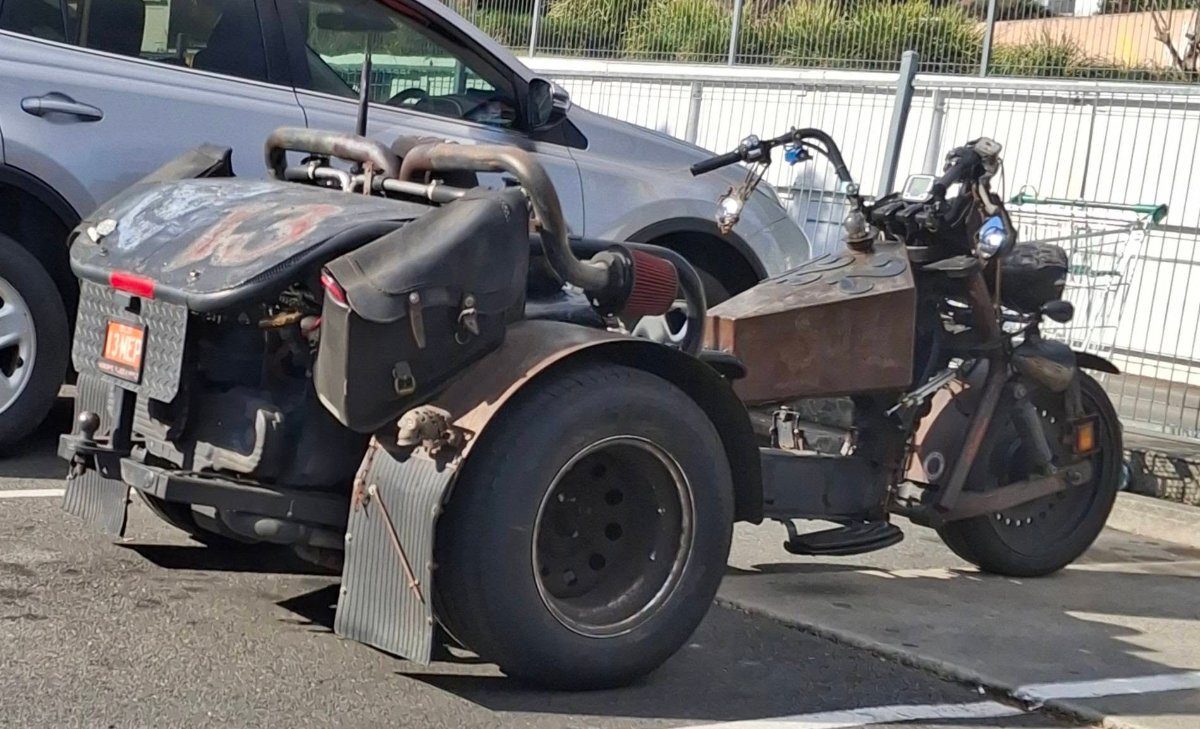
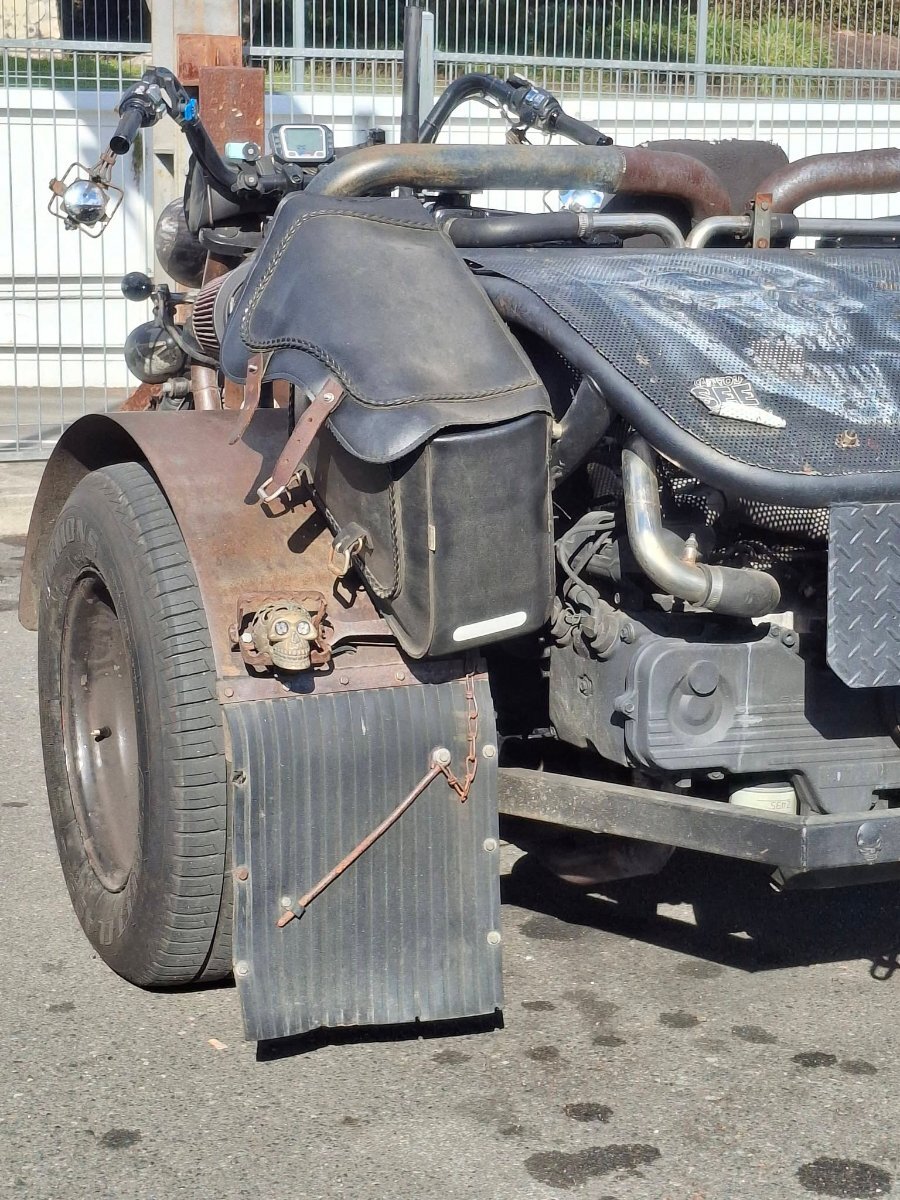
Trike seen in Brisbane last week.

-
Section 8(1) of the RDA makes it lawful.
-
In the foreseeable future, it's only the moon they have to worry about. It will be a long time before they have the technology to shoot rockets at the Emu.
-
Purtting the intent aside, are those particular words racist? Just on the wording alone, I'd call them nationalistic as only the country was mentioned, not the person's race or religion. As an example, if an anglo saxon descent Australian person told a Pom of anglo saxon descent to piss off back to England, is that rascist even tough both parties are of the same race. Intent can differ, but the wording is the same in both cases. I always thought rascism was bias against someone because of their race, not nationality. If you are white and told two South Africans to piss off back to South Africa and one is black and one is white, is it racism in both cases, only in one case or in none?
-
Jerry, I'm not sure how my credit card security works these days. The card was originally branded in my bank's name but was administered by Citibank. They were good; if there was any unusual transactions they would put a hold on it and make contact. My bank eventually gave up on credit cards and it somehow migrated to one run by NAB, which is not my bank. I don't know how good the security is with the new entity. My bank doesn't do much anymore. The only loans they deal in are housing and business loans, no credit cards, most of the physical branches shut down, third world country outsourced customer support.
-
At least I've got plenty of company; about 900,000 customers were involved.
-
My energy retailer Origin has just sent me an update on the recent data hack of their customer information. They confirmed my details were part of it, including name and address, phone number, date of birth, BSB number and last three digits of my bank account, last four digits of the credit card number and customer account details. It's just the nail in the coffin; I was leaving them anyway before this happened due to their sub standard customer support.
-
On the positive side, he's only got to hang in another 2,999 days before he gets a statue.
-
Almost Jerry. You got the u and the i arse about - Crisafulli.
-
Not sure if rearranging would help at this stage. They need to start bolting them down for the storm that's going to hit in four months time.
-
The alarm was a bit of an anticlimax after all the hype on the radio about it. I was getting ready to hold my ears for the event but it just sounded like a budgie chirping in a tree about twenty metres away. And that was with the phone on full volume. With the radio on, you could barely hear the alarm. Taking into account it was only a test, the finished product will probably be a lot more effective. It will need to be a lot louder and longer for a start. The text was in very big print, so easy to read.
-
This is Barnaby's dog Stella, the one he was barking at on the TV the other day.
-
I have a few related issues with my trailer. It has cable braking so is restricted to two tonnes GTW which is the maximum I can legally tow with my older model Rodeo. Later models are legal for three tonne so they can pull that GTW if the trailer has electrical braking and the other required specs. My trailer weighs almost 700kg empty giving it a potential payload of 1.3 tonnes. The problem with that is that my little Isuzu 4 cylinder turbo diesel is good for general driving and lighter loads but is struggling to pull that weight even without hills. About 900kg payload (giving 1.6T GTW) is about all that's practical if I keep away from steep hills. Upgrading to a bigger, more powerful truck is not viable with only intermittent towing needs. It would be good if registration and insurance were only charged on actual road use; then it would be viable to own two vehicles, one for towing and hauling loads, the other for normal use.
-
Saw this one on Pinterest.
-
That's a wild looking bit of gear. Looks like it's long retired. The tray on it reminds me of the old LJ-80 Suzuki that I deeply regret scrapping. They make a great little farm runabout. Mine was a rust bucket with a dead motor but I had two x spare chassis and a complete spare drive train with it. The good thing about them is the gearbox and transfer case are two separate entities which gives a lot of options to upgrade the engine and gearbox. Back in the day a lot of people put Corolla motors and the Toyota five speed box in the LJ-80's and retained the stand-alone Suzuki transfer box, all it needed was a drive shaft length adjustment. A mate had one of those little Daihatsu 4x4's for a farm runabout. He stripped it down and put scrub bars on it and the floor was converted to mesh, the sets were those old plastic chairs you used to see in pub beer gardens. With the mesh floor and plastic seats, it didn't matter if it was left out in the rain. Their light weight is what makes them handy, they go a lot of places with wide tyres.
-
Why is the Snowy Hydro project called Snowy Hydro 2.0? Why not just Snowy Hydro 2. The tag 2.0 sounds like a browser version. I'm wondering whether it's to allow for later updated versions like Snowy Hydro 2.1, 2.12 etc.. Maybe in the future they will tell us that support for the old version will cease by a certain date and we need another 20 billion to update to the latest version.
-
In your face book has added a new login security layer with a captcha to prove you are a human. On the plus side, it's only a string of numbers to type in, but on the down side they have stuff scribbled over them which can make them a bit too hard to read sometimes. It's added one more task to an already lengthy login process. I'm logged in all the time on my phone, but to log in on the desktop I have to: first, click on the facebook link icon, on the login page type in my email address and password, when directed to the captcha type in the numbers, that then directs me to another security layer telling me to verify on another device. I then pick up the phone, tap apps, tap the facebook icon, tap notifications, find the notification asking if it's me trying to log in on another device, scroll to the bottom of that notification and tap 'yes it's me', then tap 'always trust this device'. Then I go back to the desktop screen and have to click on 'trust this device'. And that's it, I'm finally into my FB acount.
-
Those plastic teeth look like the ones they sell on eBay.
-
There's always the house part and 2 Ha of it exempt, but there's sometimes situations like working away for a while and renting the house out, or running a business on the property for a period that would bring CGT issue. In general, I never felt comfortable with the idea of having a lot of money outlayed with no receipts or proof of expenditure, for a few different reasons. I thought saving 10% wasn't worth the disadvantages on the other side of the coin.
-
I've built one owner built house and at the time a lot of contractors offered a cash under the table deal, with the selling point being you save yourself 10% GST. One problem with that is that when you eventually go to sell it, you've outlayed a lot of money and don't have any receipts for future CGT expense write-offs.
-
It would have been interesting to watch them do it. There's a young Russian bloke on Youtube who would just grind something like that by hand with his angle grinder. He's one of the roughest I've seen. He built a V twin out of scrap in his back yard with only an arc welder and angle grinder. A couple of things he got a mate to turn up on a lathe but most of it was built by hand, except for donor Ural barrels, heads and pistons. The bottom end was all hand made.