
willedoo
-
Posts
8,496 -
Joined
-
Last visited
-
Days Won
153
Content Type
Profiles
Forums
Gallery
Downloads
Blogs
Events
Our Shop
Movies
Everything posted by willedoo
-
I had to laugh at this AI overview of parallel parking: 'The 5-Step Parallel Parking Method 1. Find a spot: Look for a space that is at least 1.5 times the length of your vehicle.' Where I live, to do that you'd have to either have a Fiat Bambino or something smaller, or leave town and go somewhere else to look for a park.
-
That's a good rule to stick by. It applies well to buying motors. You see a lot of cheap junk motors on the market but when you do the mental arithmetic of doing them up, it just doesn't stack up to buying something already up and running. I think some people buy cheap flogged out motors with missing parts thinking they've got a bargain, but when they price the work and bits required, soon realise they've bought a boat anchor.
-
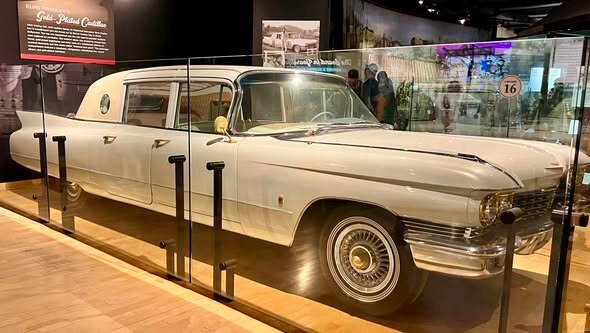
Does anyone remember seeing Elvis's Cadillac when it toured in 1968. I saw it on the top story carpark at Myers in Toowoomba. Some other cars were there on display as well, but I don't remember who they belonged to.

-
Another thing that works well is salt and vinegar spread over a few applications. Depending on how chrome work has been done, with some of it you can drop it in hydrochloric acid for a short time before rinsing and that will take it back to it's original nickel plating. A couple of years ago I aged a replica medieval hand and a half sword using salt and vinegar on the metal work. It took a few applications and a couple of weeks but worked well. It worked on the brass pommel and hilt as well and made it look a few hundred years old rather than a cheap replica. First thing with brass is to determine with a magnet if it really is brass and not steel with a coating. Next thing, a lot of that shiny brass is due to a clear lacquer coating, so that must be removed before ageing. Wood is the easy part, just sand off the offending coating then beat the wood up with a screwdriver, hammer or whatever, then coat it with a stain more rustic than the original. I've used dark tan leather dye on wood for good effect in ageing.
-
I don't know much about the Democrats but had the impression they lost their way a bit from what they originally intended to be.
-
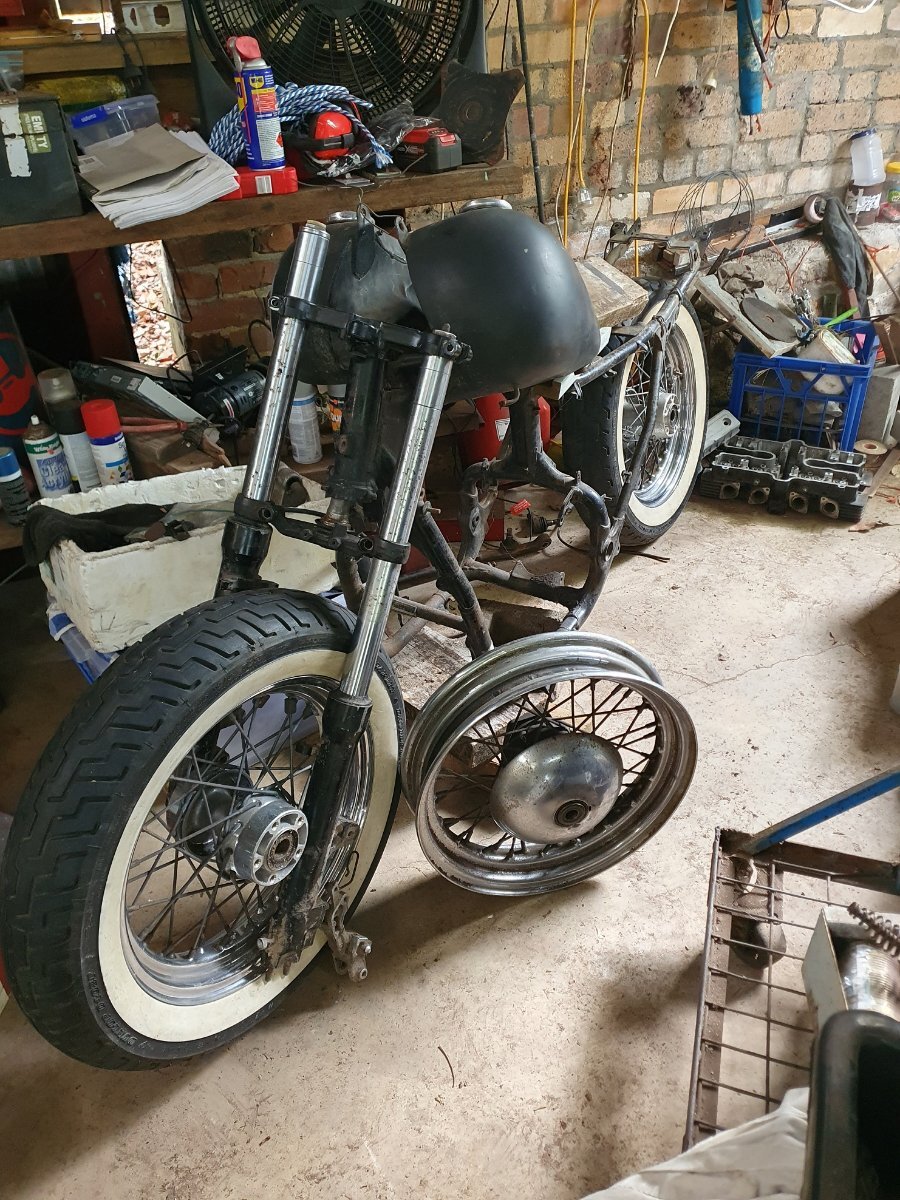
Some potential wheels - these two whitewalled Road King wheels are a bit flash for a ratbike but one thing I have a lot of experience at is turning perfectly good equipment into a pile of rust. I must admit the climate here helps a lot. The Heritage softail wheel with no tyre is already nice and aged and will most likely go on the front (when I have something that can be described as a front end, that is).
-
They used to call them the fairies at the bottom of the garden party, they obviously being those that had no truck with Don's mob.
-
Better than finding a half eaten pie, that's for sure.
-
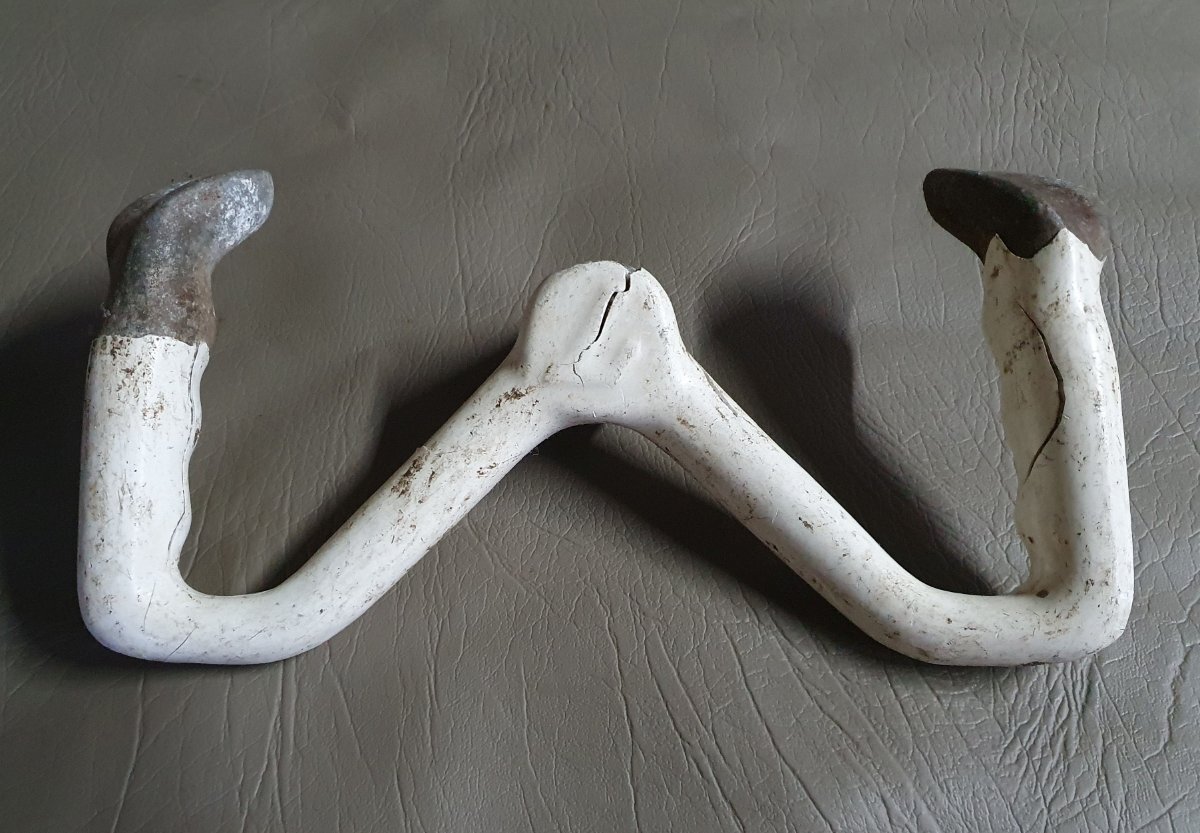
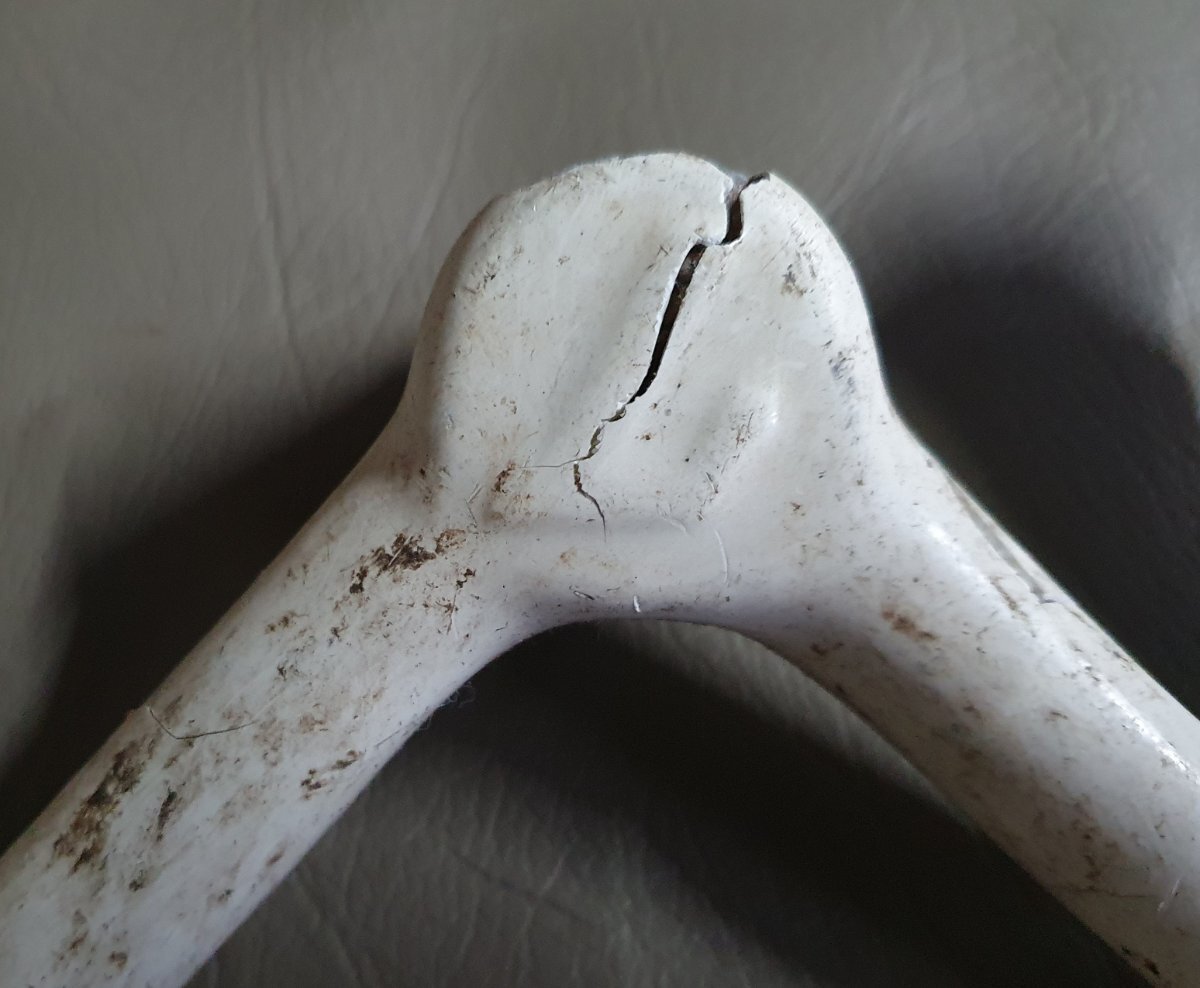
Thanks very much onetrack, I've been wondering about it's origin for a fair while now. I found it in a scrap bin.
-
Just wondering if anyone recognises what this yolk would belong to. It's only small, about 240mm across and has a logo in the centre that looks like an 'L'.
-
I seem to remember reading something about the Chinese doing a lot of crevicing in the old days.
-

Celebrating Positives (offset of the Gripes Thread)
willedoo replied to Jerry_Atrick's topic in General Discussion
Yes, it is. He's a good bloke, a Kiwi originally and a machinist by trade. I used to do volunteer work with him at our local air museum. They sold their house in a hinterland town to move into a unit near the hospital, so between that and the health issues, he sold off all his workshop equipment. I bought most of it, a lathe, mill, bench grinders, steel welding bench, a press and heaps of other stuff. Being a machinist his lathe came with a lot of extras, a keyless chuck and heaps of tooling he'd made plus a lot of rounds in steel and ali for turning. -
Celebrating Positives (offset of the Gripes Thread)
willedoo replied to Jerry_Atrick's topic in General Discussion
An old work mate has cancer and I haven't seen him since late last year. I've been meaning to ring him for a while but didn't know what to expect considering how sick he looked last time I saw him. Anyway, he rang me yesterday and he sounded great, just like his old self. It was the chemo making him sick last time I saw him he told me. His wife has cancer as well and both have been on chemo and have had a lot of success with it. They're both doing well and are back to fairly normal lives, so good news. -
It looks like he's having a lot of fun in that clip, no shortage of energy.
-
and he's playing my all time favourite guitar, a 70's gold top Les Paul Deluxe. It's on the bucket list.
-
It's an ongoing problem in this subtropical environment. With stored gear I usually try to pack it away in drier times and use silica gel packs. In this climate anything prone to mould would have to be displayed museum style behind glass to have a chance. Clove oil diluted with water in a spray mister bottle is a good mould killer/preventative. It's expensive stuff but goes a long way at the dilution rate. Another good practice with storing gear in those plastic tubs is to give it a squirt of mortein before fastening the lid. It's amazing the amount of damage one silverfish can do when it only has your gear to eat. One problem with those cliplock plastic wheeled tubs is that the lids might look tight, but the moist air can still seep in around the middle section of the lid unless you have weight on top of it or a strap around it to tighten the lid down. Best to buy the more expensive black tubs with coloured lids. The reason the really clear ones are cheap is because the type of plastic used to produce the clear ones is cheaper. The clearer the plastic, the harder and more brittle it is, more prone to cracking with age and uv. I think as age progresses on, hobbies need re-evaluating. What was sustainable won't always be. I'm thinking of starting by offloading multiples and doubles of gear that's excess to requirements and then go from there. Some of it would be better off with someone who can appreciate it more rather than having it stored away in boxes.
-
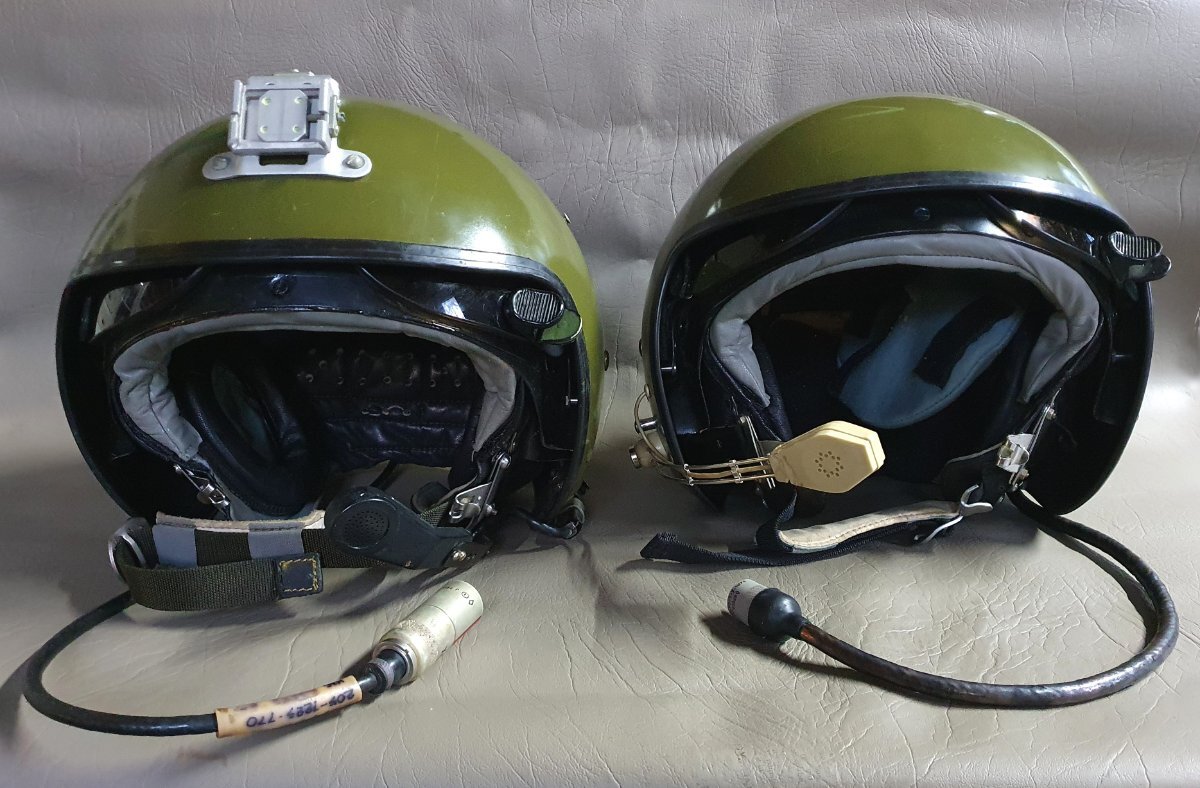
I finally located the leather helmets in the above post. The big problem is that a lot of gear was packed away in boxes in a rushed fashion with inadequate labelling, so it can be like finding a needle in a haystack. On the up side, I'm finding lots of gear I haven't seen for a long time and seeing the need for a lot of maintenance regarding storage and humidity. A big bonus yesterday was finding these two helicopter helmets that have been elusive for a very long time. So long in fact, I'd forgotten I owned the one on the left of the photo. It's a combat helmet, either from a Karmov 50/52 or a Mil-28. The reason I know that is because it has the ten pin comm lead plug that is used for encrypted communications, and also the helmet accessory mount to take the look down/shoot down targeting system. Most of the non combat helicopters have a slightly different mount to take night vision goggles instead of the targeting sight. The helmet on the right is a fairly rare variant and experimental rather than production as far as I know. The only difference between it and standard is the type of boom mic and the way it's mounted and wired, with a connector on the left helmet side to take an 02 mask with an inbuilt mic. That particular mask type is a modification of the fast jet pressure demand mask with the pressure compensating gear removed. It was used mainly in older airliners and transports mainly for the convenience of having an inbuilt microphone, and is only rated up to 12,000 metres due to it's use of a standard, non compensating expiry valve. It's one possibility the helmet was set up for doing higher altitude test flights.
-
Celebrating Positives (offset of the Gripes Thread)
willedoo replied to Jerry_Atrick's topic in General Discussion
There's another Flinders Peak in Queensland, on the SW side of Brisbane. -
Nev, it's a derogatory term used by NRL states for AFL football. On the other side of the coin they use names like kissy bums and catch me, f**k me for NRL.
-
That's right I forgot you're in aerial ping pong territory.
-
Angus Taylor's budget reply speech on Thursday night will have reduced viewer numbers in Queensland and NSW. It's on at the same time as the NRLW Origin 2 at Lang Park. I know which one I'll be watching.
-
You've got a good handle on it octave. This quote from your earlier post is an important aspect. Rule breakers have always pushed the evolution. AI by it's nature is rule based and at this stage in history is limited by that. Whether AI can evolve to become more human is something time will take care of one way or the other.
-
Celebrating Positives (offset of the Gripes Thread)
willedoo replied to Jerry_Atrick's topic in General Discussion
I miss Adelaide and always enjoyed the stopovers there. When we did Santos work we used to fly Qantas or Virgin from Brisbane to Adelaide, then take the Cobham/National Jet BAe 146 up to Moomba. -
Lighty, I didn't realise you were that kinky. Does Barnaby know about this?
-
ome, I'm thinking you're referring to Pete Townsend's use of amp feedback, as in Jimi Hendrix style (at a later date). Reverb is a built in amp feature on a lot of amps or an add on device that produces a constant echo type sound, a bit like being right up the back of a big concert hall. If you turn the reverb knob too high it will produce a cyclical sound, a bit like tremolo underwater which is not nice, but the right amount of reverb makes a lot of people happy. Reverb is a constant setting on the amp, just like setting treble and base levels, or some people might use a foot switch to activate it. Feedback is where the sound from the amp bounces back and makes the strings vibrate, the guitar pickups detect it and send it back to the amp creating a high pitched squealing loop.